

Key Takeaways
What a vehicle history report actually contains
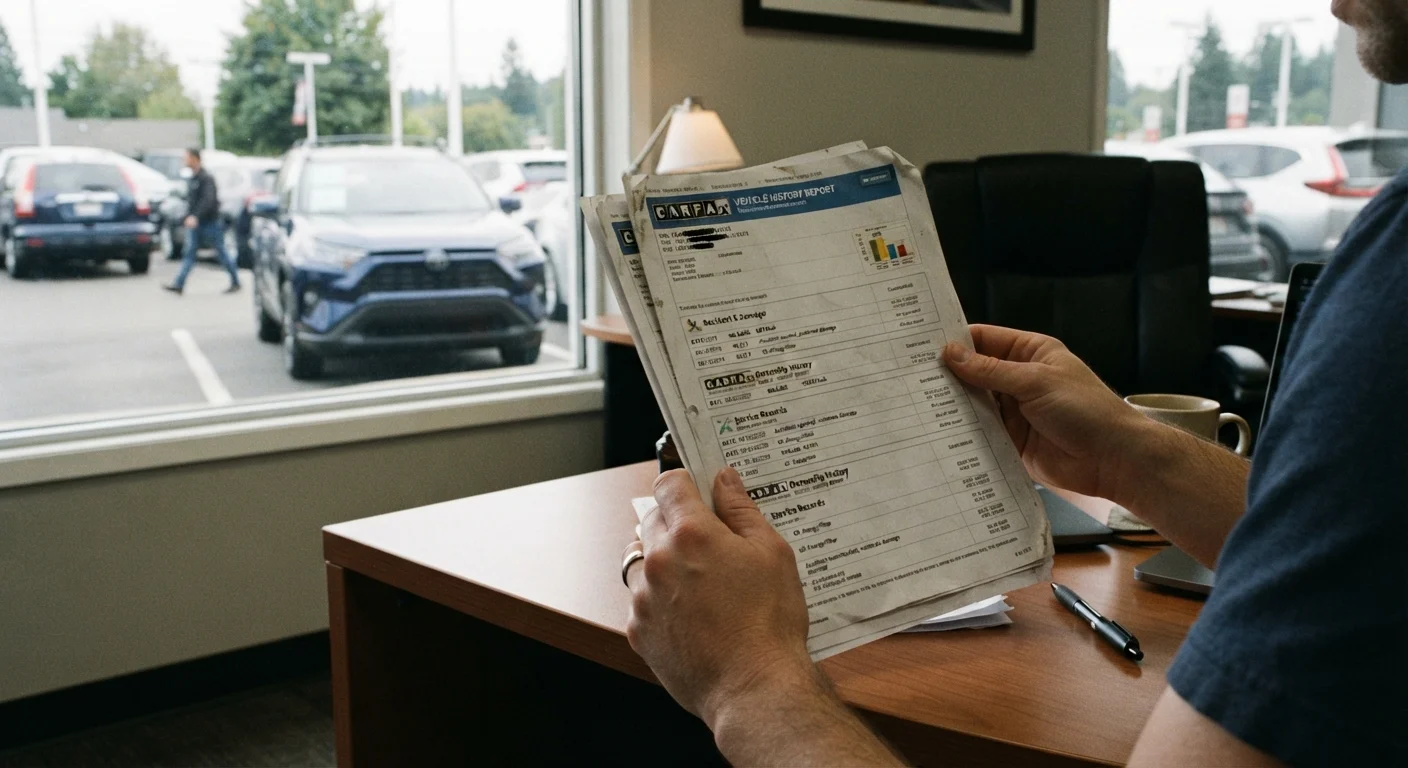
A vehicle history report aggregates records from state DMV databases, insurance companies, law enforcement, and repair facilities. It does not contain every event in a vehicle's life. Private sales between individuals, cash repair jobs at small shops, and accidents that were never reported to insurance leave no trace in the report. This is why the report is a starting point, not a guarantee.
The report organizes data into several sections: title and ownership history, odometer readings, accident and damage disclosures, recall status, and sometimes service records. Each section carries different financial implications for a buyer. Understanding what each one means helps you decide whether a vehicle fits your budget and your risk tolerance, which is information no sticker price conveys on its own.
Families shopping for a used vehicle often focus on purchase price alone. Hidden costs beyond the monthly payment can add up quickly, and a vehicle with undisclosed history problems is one of the fastest ways those costs appear. The history report is the document that brings those risks into view before you commit.
Vehicle identification number (VIN)
The 17-character code used to pull the vehicle's history from national databases.
Vehicle history report
A compiled record of ownership, accidents, title status, and odometer readings from DMV and insurance sources.
Licensed pre-purchase mechanic inspection
An independent inspection that catches mechanical issues a history report cannot reveal.
How to work through each section without missing anything
Read the report from top to bottom in chronological order the first time through. A second pass reading backward from most recent to oldest often catches inconsistencies that forward reading misses. Pay particular attention to transitions: what changed each time ownership transferred, and whether the odometer and damage records are consistent across those moments.
Locate the VIN and pull the report
The VIN appears on the driver's side dashboard (visible through the windshield), the driver's door jamb sticker, and the title document. Confirm all three match before purchasing any report. A mismatch is an immediate stop sign.
Check the title history and brand status
The title section lists every state the vehicle has been titled in and any brands applied to it. Brands to watch for include:
- Salvage: the insurer declared the vehicle a total loss at some point.
- Flood: the car sustained water damage, which degrades electronics and metal over time.
- Rebuilt or reconstructed: a previously salvage vehicle was repaired and passed a state inspection, but repair quality varies widely.
- Lemon law buyback: the manufacturer repurchased the vehicle due to defects under state lemon law.
Any of these brands affects future insurance eligibility and resale price. Some lenders will not finance a salvage or rebuilt title vehicle at all.
Review the ownership timeline
Count the number of owners and the length of each ownership period. A vehicle with five owners in eight years warrants scrutiny. Short ownership stints, particularly ones lasting only a few months, sometimes indicate a buyer discovered a problem and resold quickly.
Also note whether the vehicle was registered primarily as a personal vehicle, a fleet vehicle, or a rental. Fleet and rental vehicles tend to accumulate mileage faster and may have had less consistent maintenance, though this varies by operator.
Read the odometer entries carefully
The report lists odometer readings recorded at each title transfer, inspection, or service event. Read them in chronological order. The mileage must increase consistently. Any entry where mileage drops or stays flat over a long period suggests the odometer was rolled back or a replacement odometer was installed without disclosure.
Also compare the reported mileage against the vehicle's age. A five-year-old passenger car with 15,000 total miles is unusual and should prompt questions, not celebration.
Examine accident and damage records
Accident entries typically come from insurance claims, police reports, and collision repair shop data. For each incident noted, look for:
- Which part of the vehicle was damaged (front-end, rear, or side structural damage carries more long-term risk than a minor bumper scuff).
- Whether the report shows subsequent repair shop records after the accident. A reported accident with no follow-up repair entry is not the same as a clean repair; it may mean repairs were done off the books.
- Air bag deployment, which indicates a significant collision force regardless of how the damage is categorized.
Look at service and maintenance records
Some reports include oil changes, recalls, and other service events submitted by dealerships or participating repair shops. Consistent service entries spaced at reasonable intervals suggest the vehicle was maintained. Large gaps in service history do not prove neglect, but they warrant direct questions to the seller and a thorough mechanical inspection.
Check the open recall section. If the report flags an unresolved recall, verify its status using the NHTSA website (safercar.gov) before proceeding. Unaddressed recalls can involve safety systems and may be repaired at no cost at a franchised dealership.
Confirm there are no open liens
The lien section shows whether any lender has a financial claim against the vehicle. If a lien is listed and not shown as released, the previous owner may still owe money on the car. Buying a vehicle with an open lien can result in the lender repossessing it from you, even though you paid the seller in good faith.
Require written lien release documentation from the seller before any money changes hands. If the seller cannot produce it, walk away.
After reviewing the report, knowing how to evaluate repair estimates becomes relevant if the vehicle has accident history, because future repair costs on a vehicle with prior structural damage can be materially higher.
What the report cannot tell you
A clean vehicle history report does not mean a mechanically sound vehicle. Engine wear, suspension problems, and transmission issues do not appear in any database. A pre-purchase inspection by a licensed mechanic, conducted at a shop of your choosing rather than one recommended by the seller, is the only way to surface those problems before purchase.
Some sellers resist pre-purchase inspections. That resistance is itself information worth weighing. Several common beliefs about automotive costs lead buyers to skip steps like this, and the financial consequences of those shortcuts can be significant. Once you own the vehicle, the responsibility for repair costs transfers to you entirely.
Ongoing maintenance after purchase also matters for long-term cost control. Routine upkeep that prevents expensive repairs is far less costly than catching problems after they compound.
This article is for general informational purposes only and does not constitute legal, financial, or professional automotive advice. Consult a licensed mechanic and, where applicable, a qualified financial or legal professional before making vehicle purchase decisions.