

Key Takeaways
Summary
28 items · 30 to 60 minutes
Why packing light matters for your family's budget
Checked-bag fees on domestic flights currently run $35 or more per bag, per direction, on most US carriers. For a family of four checking two bags each way, that is $140 to $280 added to a trip before you leave the driveway. Over several trips a year, that figure compounds into a real budget line. Eliminating checked bags is one of the fastest ways to cut travel costs without changing where you go or how long you stay.
The secondary benefit is time. Families who travel carry-on only skip baggage claim entirely, board faster when early boarding is available, and avoid the anxiety of lost luggage. If you are also weighing whether flying or driving makes more financial sense, see our cost comparison for flying versus driving before committing to a mode of transport.
The checklist below assumes two adults and two children (roughly ages four to ten), a seven-night domestic trip, and destinations that have basic laundry access, whether a vacation rental washer, a coin laundry, or a bathroom sink. Adjust quantities if your accommodation has no laundry option at all.
Airline policies vary: check before you pack
Carry-on size allowances, personal item dimensions, and weight limits differ between airlines and even between fare classes on the same airline. A bag that fits one carrier's overhead bin may be gate-checked on another. Always confirm the current bag policy on your specific carrier's website before finalizing your packing, especially if you are connecting through a smaller regional carrier with tighter limits.
What to gather before you pack
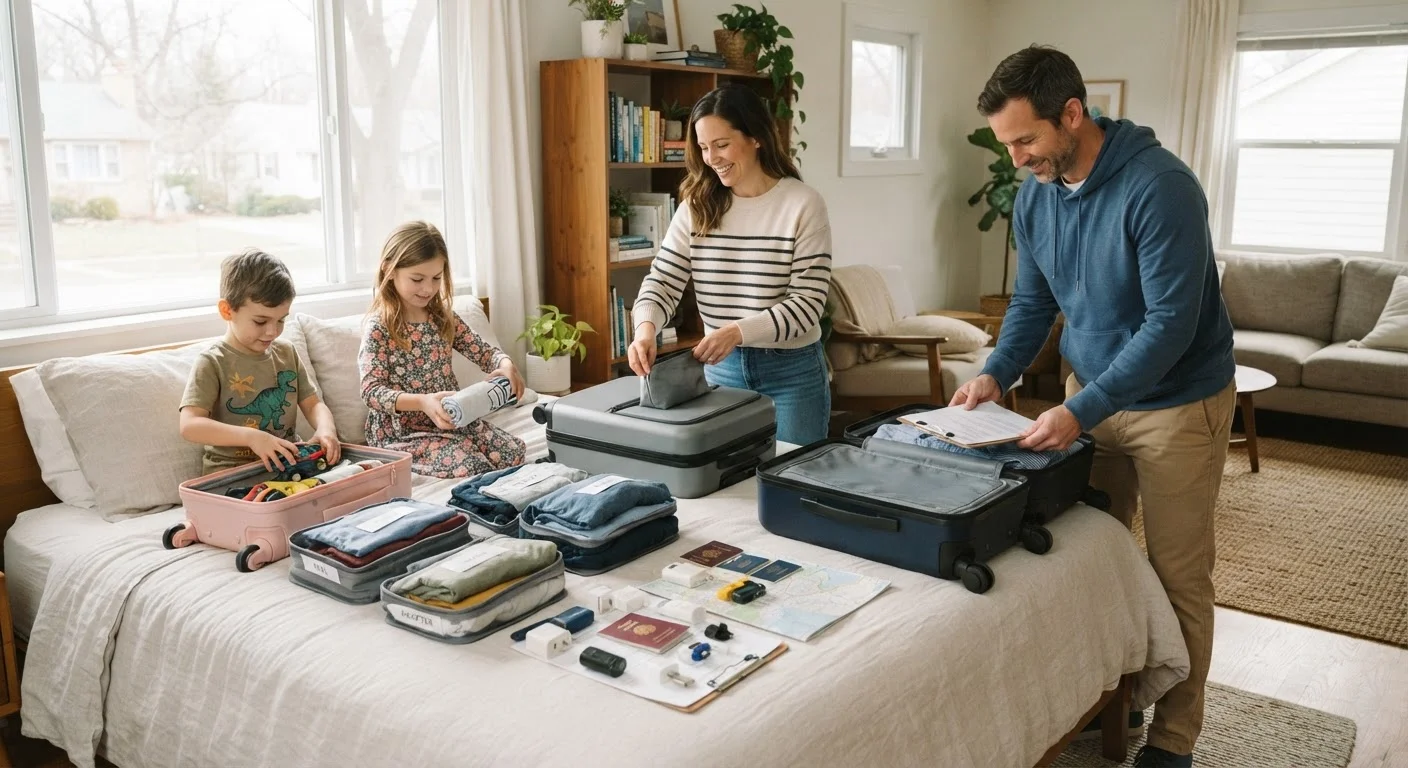
Packing light starts with the right containers. Each adult needs one carry-on bag that fits the airline's overhead bin dimensions (typically 22 x 14 x 9 inches, but confirm with your specific carrier before travel). Each child carries a personal-item daypack that fits under the seat. Toiletry items go into a single shared quart-size bag per TSA rules for carry-on liquids. Check TSA guidelines and your airline's current size and weight policies before your travel date, as these can change.
Use packing cubes to compress clothing and separate each person's items. This saves time at security and at the hotel. A small reusable bag for wet swimwear or dirty laundry is worth the few ounces it adds.
Carry-on bag (adult, per adult)
Holds the primary clothing and toiletry load for each adult; must conform to your airline's overhead bin size limits.
Child's daypack (personal item)
Fits under the seat in front and holds a child's entertainment, snacks, change of clothes, and comfort items for easy in-flight access.
Packing cubes
Compress clothing, keep each person's items separated, and speed up security unpacking and hotel organization.
Quart-size zip bag (TSA-compliant)
Holds all carry-on liquids within TSA's 3.4-ounce container and one-quart-bag rules.
Portable luggage scale
Lets you weigh bags at home and avoid surprise gate-check fees when a bag exceeds the airline's carry-on weight limit.
Reusable water bottles (one per person)
Saves money on purchased drinks at airports and attractions throughout the trip.
Small wet bag or dry bag
Contains wet swimsuits, muddy shoes, or soiled children's clothing without contaminating clean items in the same bag.
The complete packing checklist
Work through each group below. Items marked must are non-negotiable for a comfortable, cost-contained trip. Items marked should cover most scenarios. Items marked nice to have are worth including only if space remains after the must and should items are packed.
Clothing per person
Footwear
Toiletries and health
Documents and finances
Electronics and entertainment
Kids-specific items
For a broader look at costs that families frequently overlook even after nailing their packing, the article on hidden costs that inflate vacation budgets covers resort fees, activity upsells, and airport food traps worth knowing before you travel.
Tips for staying under the limit on travel day
Wear your heaviest shoes and your thickest layer onto the plane. This single habit frees meaningful space inside the bag for lighter items. Coats go in the overhead bin; they do not count as a separate personal item on most carriers, though policies vary, so verify with your airline.
Weigh bags at home with a luggage scale before leaving. Most carry-on weight limits sit between 15 and 25 pounds depending on the carrier and fare class. Exceeding those limits at the gate can result in forced checking and a fee that erases your savings entirely.
If you are traveling with a vacation rental where laundry is available, plan a single wash mid-week. This lets you pack roughly four days of clothing instead of seven, which is the single biggest volume reduction available to families. Our guide on vacation rentals versus hotel rooms for families covers how laundry access and kitchen use affect total trip cost.
This article provides general travel planning information. Airline policies, TSA rules, and bag fees change over time; verify current requirements directly with your carrier and with the TSA website before each trip. This content is not a substitute for official guidance on safety or entry requirements.